This comprehensive guide for coaches explores the critical factors in selecting rhythmic gymnastics leotards, emphasizing that the right leotard enhances performance, comfort, and confidence. It covers the unique demands of the sport, including the need for exceptional flexibility, breathability, and durability. Key factors such as fit, fabric, construction, design, and maintenance are examined in detail, with practical advice for coaches. The article highlights the importance of customization for teams and clubs, discussing how low minimum order quantities (MOQs) and OEM/ODM services from specialized manufacturers like T&J Sportswear make custom apparel accessible. It also outlines what coaches should look for in a manufacturer, including experience, design capabilities, quality control, communication, and production capacity. Quality assurance processes, sampling, budgeting, and common mistakes to avoid are addressed. The guide further discusses team identity, future trends, and the value of working with a reliable partner. T&J Sportswear is presented as an example of a manufacturer that supports coaches through expert design, flexible customization, rigorous quality control, and one-to-one service. With over 10 years of experience, 36+ countries served, and a daily capacity of 300+ leotards, T&J Sportswear helps coaches equip their gymnasts with high-quality, performance-driven leotards that meet the demands of both training and competition.
Rhythmic gymnastics is a sport where artistry, athleticism, and presentation converge. For coaches, selecting the right leotard for their gymnasts is not merely a matter of aesthetics; it is a critical decision that impacts performance, comfort, and confidence. A well-chosen leotard can enhance a gymnast's movements, while a poor one can cause distractions, discomfort, and even injury. This guide aims to provide coaches with a comprehensive framework for selecting rhythmic gymnastics leotards, covering everything from fabric technology to custom design, and highlighting how working with a specialized manufacturer like T&J Sportswear can streamline the process.
Rhythmic gymnastics combines elements of ballet, dance, and acrobatics with the manipulation of apparatuses such as ribbons, hoops, balls, clubs, and ropes. Unlike artistic gymnastics, where power and explosive strength are paramount, rhythmic gymnastics emphasizes grace, flexibility, and fluidity. The leotard, therefore, must allow for an extraordinary range of motion. It must stretch, twist, and bend with the gymnast without riding up, pinching, or restricting movement. Coaches must recognize that a leotard designed for artistic gymnastics or general fitness may not meet the specific needs of a rhythmic gymnast.
undefined
Moreover, rhythmic gymnastics leotards are often more decorative, featuring intricate designs, rhinestones, and sublimation prints. These embellishments must be securely attached and not interfere with the gymnast's grip on the apparatus or her comfort during a routine. The visual appeal of the leotard is also part of the performance; judges evaluate artistry, and a stunning leotard can contribute to the overall impression. Thus, coaches must balance functionality with aesthetics.
When evaluating leotards for a rhythmic gymnastics team or individual gymnast, coaches should consider several critical factors. These include fit, fabric, construction, design, and durability. Each factor plays a vital role in ensuring that the leotard supports the athlete's performance rather than hindering it.
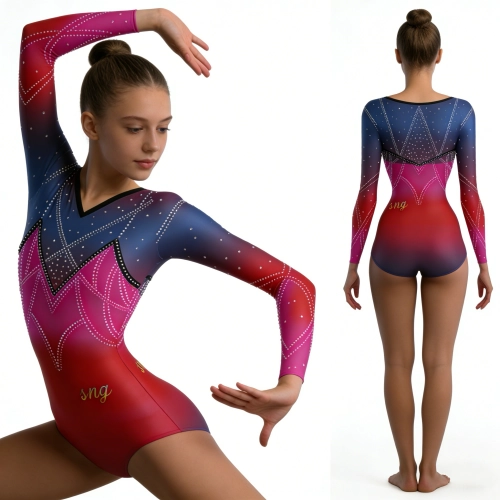
Fit is arguably the most important aspect of a rhythmic gymnastics leotard. A leotard that is too tight can restrict breathing and movement, while one that is too loose can shift, causing discomfort and potential wardrobe malfunctions. Coaches should look for leotards that offer a snug but comfortable fit, with enough stretch to accommodate dynamic movements. The leg openings should not cut into the skin, and the shoulder straps should stay in place without digging in.
It is also essential to consider the gymnast's body type. Rhythmic gymnasts come in various shapes and sizes, and a one-size-fits-all approach is ineffective. Custom-fitted leotards are often the best solution, as they are tailored to the individual's measurements. This is where working with a manufacturer that offers custom sizing, such as T&J Sportswear, becomes invaluable. With more than 10 years of experience in gymnastics apparel, T&J Sportswear understands the specific fit requirements of rhythmic gymnasts and can produce leotards that provide optimal comfort and freedom of movement.
The fabric of a leotard significantly affects its performance. Rhythmic gymnastics is an intense sport, and gymnasts sweat. Therefore, moisture-wicking and breathable fabrics are essential to keep the athlete dry and comfortable. Common materials include Lycra, Spandex, Polyester, Mystique, and Mesh. Each fabric has its own properties: Lycra and Spandex offer excellent stretch and recovery; Polyester is durable and colorfast; Mystique has a shiny, metallic finish often used for competition leotards; and Mesh provides breathability and a lightweight feel.
Coaches should look for leotards that combine these materials strategically. For example, a competition leotard might use Mystique for the main body to create a striking visual effect, with Mesh panels for ventilation. T&J Sportswear pays close attention to fabric selection, ensuring that each leotard balances stretch, breathability, durability, and visual appeal. Their product range includes competition leotards, practice leotards, and warm-up wear, all designed with performance in mind.

Additionally, the fabric should be durable enough to withstand frequent use and washing. Rhythmic gymnasts train multiple times a week, and their leotards undergo significant wear and tear. Cheap fabrics may pill, fade, or lose their elasticity quickly, leading to frequent replacements. Investing in high-quality fabrics from a reputable manufacturer saves money in the long run and ensures consistent performance.
The construction of a leotard is often overlooked but is crucial for durability and comfort. Flatlock stitching is commonly used in gymnastics apparel because it creates flat, smooth seams that reduce chafing and irritation. Coaches should inspect the stitching on sample leotards to ensure it is tight, even, and free of loose threads. Reinforced stress points, such as the shoulder seams and crotch area, add to the garment's longevity.
T&J Sportswear emphasizes quality construction throughout its manufacturing process. From pattern development to cutting, sewing, and finishing, every stage is carefully monitored. Their production team includes 30+ skilled workers who produce over 300 leotards per day, maintaining consistent workmanship even for large orders. This level of attention to detail ensures that each leotard meets the demands of both training and competition.
In rhythmic gymnastics, the leotard is not just functional; it is a costume that contributes to the artistic narrative of the routine. Coaches should consider the design carefully, taking into account the gymnast's personal style, the music, and the theme of the performance. Colors, patterns, and embellishments should complement the routine and enhance the gymnast's stage presence.
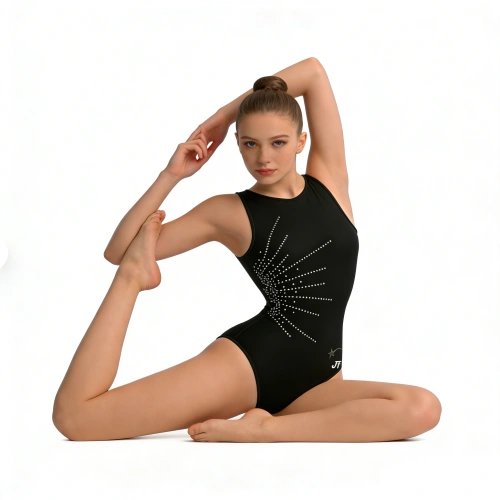
Common design elements include sublimation printing, which allows for vibrant, complex graphics that do not fade or crack; rhinestones and crystals, which add sparkle and catch the light; and color blocking, which can create slimming or dynamic visual effects. Mesh inserts can add a modern, edgy look while providing ventilation. Coaches may also want to incorporate team logos, names, or other branding elements for a unified team appearance.
Customization is a key strength of T&J Sportswear. Their in-house design team can help coaches develop unique designs based on sketches, reference images, or even just a color palette. They offer OEM and ODM services, meaning they can produce leotards according to a coach's exact specifications or collaborate on new concepts. This flexibility allows coaches to create leotards that truly reflect their team's identity and the individual gymnast's personality.
Rhythmic gymnastics leotards are an investment, and coaches want them to last. Durability depends on fabric quality, construction, and how well the leotard is cared for. Coaches should advise gymnasts to hand wash leotards in cold water and air dry them to preserve elasticity and embellishments. Rhinestones should be securely attached; otherwise, they may fall off during a routine, creating a distraction and a safety hazard.
When selecting a manufacturer, coaches should inquire about the quality control processes. T&J Sportswear conducts thorough inspections at multiple stages, checking fabric condition, printing quality, stitching, measurements, rhinestone placement, and overall appearance. They also offer certifications such as ISO9001, SGS, and CE for applicable products, providing assurance of quality and safety. This commitment to quality ensures that coaches receive leotards that withstand the rigors of training and competition.
For coaches managing a team or a club, custom leotards are often a necessity. They foster a sense of unity and professionalism, and they ensure that every gymnast has a leotard that fits properly. However, custom orders can be daunting, especially for smaller clubs with limited budgets. Many manufacturers require high minimum order quantities (MOQs), making it difficult for clubs to order small batches or test new designs.
This is where T&J Sportswear stands out. They offer low MOQs starting from 10 sets for selected products, making custom leotards accessible to gymnastics clubs, new brands, and boutique retailers. This flexibility allows coaches to order team uniforms without committing to excessive inventory. They can also gradually expand their collection as their club grows.
Customization options with T&J Sportswear are extensive. Coaches can customize colors, logos, patterns, labels, packaging, and more. The design team can assist with artwork development, ensuring that the final product matches the coach's vision. Whether a club needs a simple practice leotard with a team logo or an elaborate competition leotard with rhinestones and sublimation graphics, T&J Sportswear can deliver.
Moreover, T&J Sportswear provides matching warm-up wear and team apparel, allowing coaches to create a complete team collection. This one-stop solution simplifies the ordering process and ensures consistency in design and quality across all team gear.
Selecting the right manufacturer is a critical decision for any coach. The manufacturer's reliability, communication, and expertise directly impact the quality of the final product and the overall experience. Here are key factors coaches should consider when choosing a gymnastics apparel manufacturer:
By evaluating manufacturers against these criteria, coaches can find a reliable partner who will help them provide their gymnasts with the best possible apparel.
Quality control is a cornerstone of successful gymnastics apparel manufacturing. A leotard that looks beautiful in a sample may not perform well in bulk production if quality is not consistently maintained. Coaches should inquire about the manufacturer's quality control procedures and ensure that they cover all critical aspects.
T&J Sportswear implements a rigorous quality control process. It begins with sample development, where coaches can review the design, fabric, fit, decoration, and finishing before mass production. This step is crucial for catching any issues early and making adjustments. Once bulk production begins, inspections are conducted at various stages, including fabric inspection, cutting, sewing, printing, rhinestone application, and final finishing.
Key inspection points include:
By adhering to these inspection protocols, T&J Sportswear minimizes common problems such as inconsistent sizing, printing defects, loose decoration, or uneven finishing. This commitment to quality ensures that coaches receive leotards that meet their expectations and perform reliably.
Additionally, T&J Sportswear offers certifications such as ISO9001, SGS, and CE for applicable products. These certifications demonstrate a commitment to international quality standards and can be provided upon request. Coaches can have confidence that the leotards they order are safe, durable, and of high quality.
Before placing a large order, coaches should always request a sample. A sample allows the coach to evaluate the leotard's fit, fabric, construction, and design in person. It also provides an opportunity to test the leotard during practice to ensure it performs well under movement. T&J Sportswear supports sample development and encourages coaches to review samples before committing to bulk production. This step can save time and money by identifying any issues early and ensuring that the final product meets the coach's standards.
During the sampling process, coaches should check:
By thoroughly evaluating a sample, coaches can provide feedback to the manufacturer and make any necessary adjustments before bulk production. This collaborative approach ensures that the final leotards are exactly what the coach and gymnasts need.
Budget is a significant consideration for many coaches and clubs. Rhythmic gymnastics leotards can range from affordable practice wear to high-end competition pieces with elaborate embellishments. Coaches should determine their budget early and communicate it to the manufacturer. A reputable manufacturer like T&J Sportswear can work with coaches to find solutions that meet their budget without compromising on quality.
When budgeting, coaches should consider the following:
T&J Sportswear offers competitive pricing and flexible solutions to help coaches stay within budget. Their low MOQs and customizable options make it easier for clubs to afford high-quality custom leotards.
In recent years, sustainability and ethical manufacturing have become important considerations for many consumers, including coaches and gymnasts. Coaches may prefer to work with manufacturers who prioritize environmentally friendly practices and fair labor conditions. While T&J Sportswear does not explicitly highlight sustainability certifications in its provided information, the company's focus on quality, durability, and long-term partnerships suggests a commitment to responsible manufacturing. Coaches can inquire about a manufacturer's sustainability practices when selecting a supplier.
Durable leotards that last longer reduce waste and are more sustainable than cheap, disposable alternatives. By investing in high-quality leotards from a reputable manufacturer, coaches can contribute to a more sustainable approach to apparel consumption.
To illustrate how a specialized manufacturer can support coaches, consider the following scenario. A gymnastics club in the United States is preparing for a regional competition. The coach wants custom leotards for the team that reflect the club's colors and logo. The club has 12 gymnasts, a limited budget, and a tight deadline.
The coach contacts T&J Sportswear. The company's design team works with the coach to create a design that incorporates the club's colors and logo using sublimation printing. They suggest a Lycra and Mesh combination for breathability and stretch, with rhinestones on the bodice for added sparkle. The coach approves a sample, and T&J Sportswear produces 12 custom leotards in time for the competition. The low MOQ of 10 sets makes the order feasible for the club's budget. The leotards arrive on time, fit perfectly, and the gymnasts love them. The club places another order for practice leotards and warm-ups, cementing a long-term partnership with T&J Sportswear.
This scenario demonstrates the value of working with a manufacturer that offers customization, low MOQs, design support, and reliable production. T&J Sportswear's 10+ years of experience, 36+ countries served, and 300+ daily leotard capacity enable them to meet the needs of clubs of all sizes.
Selecting rhythmic gymnastics leotards can be fraught with pitfalls. Coaches can benefit from learning about common mistakes to avoid them. Here are some mistakes to watch out for:
By avoiding these mistakes, coaches can ensure a smooth and successful leotard selection process.
A team leotard is more than just clothing; it is a symbol of unity and pride. When gymnasts wear matching leotards, they feel part of a team, which can boost morale and performance. Coaches can use leotard design to reinforce team values and create a strong visual identity. Custom leotards with team colors, logos, and mottos can foster a sense of belonging and motivate gymnasts to perform their best.
Moreover, a well-designed leotard can enhance the team's professional image at competitions. Judges, spectators, and competitors notice coordinated, high-quality apparel. It signals that the team is serious, organized, and dedicated. T&J Sportswear's custom team leotards and matching warm-ups help coaches achieve this professional look.
The world of gymnastics apparel is constantly evolving. Coaches should stay informed about emerging trends to ensure their teams look and perform their best. Some trends to watch include:
T&J Sportswear stays abreast of these trends and can incorporate them into custom designs. Their design team is skilled in using modern techniques like sublimation printing and rhinestone application to create contemporary leotards that meet the latest demands.
Selecting the right rhythmic gymnastics leotard is a multifaceted task that requires careful consideration of fit, fabric, construction, design, and durability. Coaches play a pivotal role in this process, ensuring that their gymnasts are equipped with apparel that enhances performance and confidence. By working with a specialized manufacturer like T&J Sportswear, coaches can access expert design support, flexible customization, low MOQs, and rigorous quality control. T&J Sportswear's 10+ years of experience, 36+ countries served, and 300+ daily leotard capacity make them a reliable partner for gymnastics clubs, teams, brands, and distributors worldwide.
Whether a coach is ordering a single competition leotard or outfitting an entire team, the principles outlined in this guide can help navigate the selection process. Prioritizing the gymnast's needs, investing in quality, and partnering with a trustworthy manufacturer are the keys to success. With the right leotard, gymnasts can focus on what matters most: their performance and their passion for the sport.
About T&J Sportswear: T&J Sportswear is a professional gymnastics apparel manufacturer specializing in custom gymnastics leotards and teamwear for clubs, teams, brands, wholesalers, and distributors worldwide. With more than 10 years of manufacturing experience, they provide reliable quality, flexible customization, and professional service for customers in the US, Europe, and other international markets. Their main products include competition gymnastics leotards, practice gymnastics leotards, custom team leotards, rhinestone gymnastics leotards, and gymnastics warm-up wear. They support OEM and ODM services, from design development and sample making to bulk production. With low MOQ, competitive pricing, and one-to-one service, T&J Sportswear makes it easier for new brands, gymnastics clubs, and established distributors to develop their own collections.
