Choosing a competition gymnastics leotard supplier is a performance decision as much as a purchasing one. Competition leotards must deliver precise fit, secure coverage, full range of motion, durable decoration, and consistent appearance across an entire team, so the manufacturer behind the garment directly affects how athletes look and move. Buyers should begin with a written internal brief covering product type, quantity, size distribution, design direction, decoration, branding, budget, and deadline, then screen suppliers against that brief rather than against marketing materials. The most effective first filter is specialization. Manufacturers focused specifically on gymnastics apparel understand stretch, recovery, coverage, and shoulder construction in ways general sportswear producers do not. Experience across multiple international markets is also valuable, since North American and European buyers tend to prioritize quality, customization depth, consistency, and reliable communication. Design capability is the next differentiator: some suppliers only execute supplied artwork, while others offer in-house design teams and both OEM and ODM services, turning sketches, reference images, or color palettes into production-ready garments. Materials such as Lycra, Spandex, Polyester, Mystique, and Mesh should be selected according to whether the priority is stretch, breathability, durability, or visual effect, and construction should be evaluated through flat, secure stitching and full elastic recovery. Commercial terms matter equally. Low minimum order quantities, sometimes starting from 10 sets for selected products, allow clubs and new brands to test designs before committing to large volumes. Production capacity should be read as a measure of consistency rather than speed, since a stable workforce reduces the risk of quality drift between the first and last unit. Quality control should span sample approval through bulk inspection, covering fabric, printing, stitching, measurements, rhinestone placement, and finishing. Buyers should also verify certifications such as ISO9001, SGS, and CE where applicable, confirm lead times with buffer for shipping and customs, and ask direct questions about defect resolution and reorders. Finally, responsiveness during the inquiry stage predicts reliability during production. A dedicated contact, clear answers, realistic timelines, and a genuine interest in long-term partnership distinguish a dependable manufacturing partner from a transactional vendor. Applied consistently, this framework helps clubs, teams, brands, wholesalers, and distributors select a supplier that delivers quality gymnastics apparel efficiently, flexibly, and reliably.
How to Choose a Competition Gymnastics Leotard SupplierChoosing a supplier for competition gymnastics leotards is one of the most consequential decisions a gymnastics club, team director, brand owner, or distributor will make in a given season. Competition leotards are not ordinary apparel. They sit at the intersection of athletic performance, precise fit, visual drama, and unforgiving deadlines. A leotard that photographs beautifully but restricts shoulder rotation, or one that arrives three weeks before a regional championship, can undo months of careful planning. The supplier behind that leotard is therefore not simply a vendor. They are a manufacturing partner whose capabilities, communication habits, and quality standards directly shape how a team looks and performs on the competition floor.
For clubs and brands entering the market for the first time, the search can feel overwhelming. There are hundreds of suppliers advertising gymnastics apparel, and from the outside many of them look similar. Websites use the same vocabulary, quotations arrive with similar formatting, and sample photos often look interchangeable. The differences emerge in the details: whether the supplier actually manufactures gymnastics-specific garments, whether they understand stretch and coverage requirements, whether they can hold consistent sizing across a bulk order, and whether they answer questions promptly and honestly.
This article walks through the practical criteria that experienced buyers use when evaluating competition leotard suppliers. It covers specialization, design capability, materials, minimum order quantities, production capacity, quality control, certification, communication, pricing structures, sampling, and long-term partnership potential. The goal is to give clubs, teams, brands, wholesalers, and distributors a clear framework they can apply to any supplier they encounter, whether that supplier is a small workshop or an established manufacturer such as T&J Sportswear.
It is tempting to treat leotard sourcing as a purchasing task rather than a performance task. In reality, the two are inseparable. A competition leotard must stay in place during a tumbling pass, a release move on bars, or a full twisting dismount. It must allow a full range of motion through the shoulders, hips, and torso. It must provide secure coverage without requiring constant adjustment, and it must feel comfortable enough that the athlete stops thinking about the garment altogether.
Those requirements are engineering problems, not decoration problems. They depend on pattern development, fabric selection, stitch type, seam placement, elastic recovery, and the way a manufacturer understands body movement. A supplier who makes general sportswear may produce a visually acceptable leotard, but without gymnastics-specific pattern knowledge, the fit will often be slightly wrong in ways that only become obvious when an athlete is mid-routine.
There is also a commercial dimension. Competition leotards are typically ordered in coordinated sets for an entire team, often in a specific colorway tied to club identity. If the supplier cannot reproduce that colorway consistently across multiple sizes and a reorder six months later, the team will look mismatched on the floor. Consistency, in this context, is a performance attribute as much as a manufacturing one.
Before evaluating suppliers, it helps to be precise about what is being sourced. Competition leotards and practice leotards share a silhouette but serve different purposes, and the manufacturing priorities differ accordingly.
Practice gymnastics leotards prioritize comfort, breathability, moisture management, and durability for daily training. They are washed frequently, stretched repeatedly, and worn for hours at a time. The design brief tends toward practical colorways and patterns, with cost efficiency and longevity mattering more than visual spectacle.
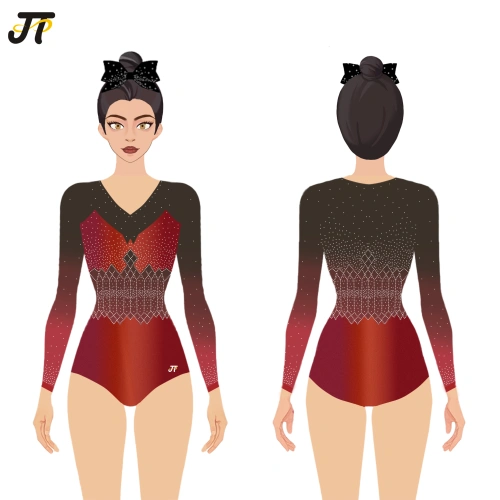
Competition leotards place greater emphasis on precision fit, secure coverage, decorative detail, and visual impact under arena lighting. They may incorporate sublimation printing, color blocking, mesh panels, rhinestones, crystal decoration, and layered fabric effects. The finishing standard is higher because the garment will be photographed, filmed, and scrutinized.
A capable supplier should be able to articulate this distinction clearly. If a manufacturer describes their competition and practice lines using identical language, with no mention of construction differences, that is an early signal that they may be applying a single generic pattern to multiple product categories.
The most successful sourcing projects begin before any supplier is contacted. Clubs and brands that arrive at the first conversation with a written brief consistently get better quotations, faster samples, and fewer revisions.
A useful brief typically covers the following elements:
With this document in hand, the evaluation process becomes far more objective. Suppliers can be compared on how well they respond to the same set of requirements, rather than on how attractive their marketing materials appear.
The single most useful filter when screening suppliers is specialization. Gymnastics apparel has a narrow technical profile, and manufacturers who work in it daily accumulate knowledge that general sportswear producers simply do not have. This knowledge covers stretch ratios, recovery behavior, coverage requirements at the leg line, shoulder construction, and the way different fabrics behave when combined.
A specialized gymnastics apparel manufacturer such as T&J Sportswear, for example, has spent more than ten years focused specifically on gymnastics leotards and teamwear. That focus shapes everything from pattern libraries to the way rhinestones are applied and inspected. Over that period, products and services from such manufacturers have reached customers in more than 36 countries, which builds practical familiarity with different sizing systems, market expectations, and product preferences across regions.
Regional experience matters more than buyers often expect. North American and European customers, for instance, tend to place strong emphasis on product quality, customization depth, consistency between sample and bulk, and reliable communication. A supplier with established experience in those markets is more likely to understand compliance expectations, labeling requirements, and the level of finishing that buyers consider standard.
Some suppliers function as pure production facilities. They will manufacture whatever artwork is supplied, provided the file is technically usable. Others operate as development partners who can take a rough sketch, a photograph of a rival design, or a color palette and turn it into a production-ready garment.
For clubs with an existing design, a pure production facility may be sufficient. For new brands, clubs refreshing their identity, or distributors building a differentiated range, design capability becomes a major differentiator. A professional in-house design team can help develop concepts, refine proportions, recommend fabric combinations, and flag production issues before sampling begins.
T&J Sportswear, for example, maintains an in-house design team specializing in gymnastics apparel. Beyond manufacturing customer-supplied designs, the team can develop new concepts based on sketches, reference images, color combinations, or team identities. For competition leotards, this can involve combining sublimation graphics, color blocking, mesh, rhinestones, crystal decoration, and various fabric effects to create distinctive visual results, along with customized colors, logos, patterns, and labels.
Two terms appear constantly in supplier conversations, and buyers should understand both before comparing quotations.
Many capable manufacturers offer both. T&J Sportswear supports OEM and ODM services and can develop products from customer designs, sketches, reference images, color requirements, or original ideas. This flexibility matters because a club launching its first custom team uniform and a distributor commissioning a full seasonal range have very different starting points.
Fabric selection is where technical quality becomes tangible. Competition leotards typically use materials such as Lycra, Spandex, Polyester, Mystique, and Mesh, depending on the design and application. Each brings different properties, and the right choice depends on whether the priority is stretch, lightweight construction, breathability, quick drying, comfort, durability, or visual appearance.
Buyers should ask suppliers to explain their fabric reasoning rather than simply accept a generic answer. A useful conversation covers:
Construction matters equally. Stitching should be flat, secure, and consistent, with no irritation at seam edges. Elastic should recover fully. Leg openings should sit correctly without riding up during movement. For training leotards, the emphasis falls on comfortable stretch, durability, moisture management, and everyday wear. For competition leotards, the emphasis shifts toward precision fit, secure coverage, decorative detail, and professional finishing.
Minimum order quantity, usually abbreviated as MOQ, is often the criterion that decides whether a project is viable at all. Large factories frequently require hundreds of units per design, which is unrealistic for a single gymnastics club ordering team uniforms for twenty athletes or a new brand testing a first collection.
Flexible MOQs open the door to smaller buyers. Some manufacturers offer low MOQ starting from 10 sets for selected products, which gives gymnastics clubs, new brands, boutique retailers, and smaller distributors room to test designs or launch collections without committing to large volumes before knowing how a design will perform in their market.
When evaluating MOQ, buyers should clarify several details:
These questions prevent surprises later, particularly when a club wants to add three extra leotards for a late roster addition.
Production capacity is frequently misunderstood. Buyers often read a daily output figure and assume it means faster delivery, but the more important implication is consistency. A manufacturer with a stable, experienced workforce can move from a single approved sample to a bulk order without the quality drifting between the first and the last unit.
Capacity figures also indicate whether a supplier can absorb a large team order without subcontracting to unknown third parties. Subcontracting is one of the most common causes of inconsistency in gymnastics apparel, because a different workshop may apply different stitching standards, rhinestone layouts, or measurement tolerances.
It is reasonable to ask directly how production is organized. A manufacturer such as T&J Sportswear, for instance, operates with a factory team of more than 30 skilled workers and reports a production capacity of over 300 leotards per day. That combination supports both flexible customization and larger wholesale or team orders. The real value, however, lies in the ability to maintain stable workmanship across the entire run, with attention to fabric, printing, stitching, sizing, rhinestone placement, and overall finishing throughout production.
Quality control is not a single inspection at the end of production. It is a sequence of checkpoints, and buyers should understand where each one sits.
The process typically begins during sample development, when the customer reviews design, fabric, fit, decoration, and finishing before confirming mass production. This stage is the least expensive place to correct mistakes. A misplaced logo, an uncomfortable seam, or a shade of color that reads differently in daylight than on screen can all be adjusted before tooling and bulk cutting begin.
During bulk production, inspection points commonly include:
A well-structured process is designed to reduce common problems such as inconsistent sizing, printing defects, loose decoration, and uneven finishing. Buyers should ask what happens when a defect is found, who bears the cost, and how replacements are handled. A supplier who answers these questions clearly and without hesitation is usually one that has dealt with the issue before and has a process in place.
Depending on the destination market, competition leotards may need to satisfy testing or documentation requirements. Distributors selling into regulated retail channels, in particular, often need evidence that products meet applicable standards.
Certifications such as ISO9001, SGS, and CE are commonly referenced in gymnastics apparel manufacturing for applicable products. Specific certification and testing documentation should be requested according to the product and the customer requirements, and buyers should verify that the documents correspond to the actual materials and components used in their order rather than to a different product line.
Beyond formal certification, compliance also covers labeling, fiber content disclosure, care instructions, and packaging requirements. These details vary by market, and a supplier with international experience is usually better equipped to handle them without repeated clarification.
Manufacturing quality is only half of a successful supplier relationship. The other half is communication. Custom gymnastics apparel involves many small decisions, and each one requires a clear exchange between buyer and supplier. When communication is slow or vague, the cost appears later in the form of revisions, delays, and disappointment.
Buyers should evaluate responsiveness during the inquiry stage, before any money changes hands. Useful signals include:
One-to-one service is particularly valuable in custom work. From initial inquiry and design development to sampling, production, inspection, and shipment, a dedicated contact allows customers to communicate requirements directly and receive assistance with product development, customization, production details, and logistics. This structure reduces the risk of instructions being lost between departments.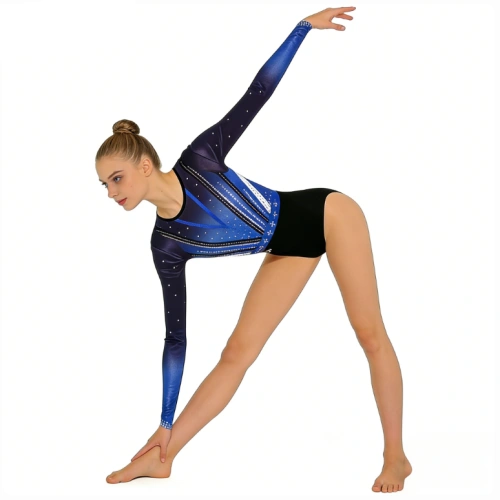
Price comparisons are rarely as straightforward as they appear. Two quotations for the same leotard design may differ significantly because they include different elements, or because one supplier has omitted costs that will appear later.
A complete quotation should specify:
The lowest quotation is not automatically the best value. A slightly higher price that includes proper rhinestone application, consistent sublimation, and dependable communication often costs less overall than a cheap order that requires remakes.
If one stage deserves patience, it is sampling. A sample reveals more about a supplier than any catalogue or quotation. It shows the actual fabric hand feel, the accuracy of color matching, the quality of stitching, the security of decoration, and the precision of sizing.
Buyers should review samples with the athletes who will wear them whenever possible. A leotard that looks correct on a hanger may behave differently in motion. Having two or three gymnasts of different body types try the sample and report on shoulder movement, leg line, and comfort provides information no photograph can convey.
It is also worth asking whether the supplier keeps the approved sample on file as a production reference. This practice is a strong indicator of a manufacturer that treats consistency seriously, because it allows the bulk order to be checked against a physical standard rather than a memory.
Competition calendars are fixed. Regionals, nationals, and international meets do not move, which means lead time planning is a critical part of supplier selection.
Buyers should establish three dates rather than one: the artwork approval deadline, the production completion date, and the delivery deadline. Working backward from the competition date, they should build in buffer time for customs clearance, domestic shipping, and any fitting adjustments.
It is reasonable to ask how a supplier handles peak season. Gymnastics apparel manufacturing experiences predictable surges before major competition periods, and a manufacturer that acknowledges these peaks and plans around them is more reliable than one that promises identical lead times year-round.
Sizing is one of the most underestimated challenges in team leotard ordering. Gymnastics teams include athletes of widely varying body types, and youth athletes may grow between measurement and delivery.
A capable supplier should provide a detailed size chart with clear measurement instructions, be willing to produce custom sizes for individual athletes, and understand that a size medium from one manufacturer may not match a size medium from another. When transitioning between suppliers, it is wise to order a size set first and evaluate the fit before committing to a full team order.
Decoration is where competition leotards distinguish themselves visually, and also where quality problems are most visible. Sublimation printing should stretch with the fabric without cracking or fading. Rhinestones and crystals should adhere securely through washing and movement, with consistent spacing and alignment.
Buyers should ask which application method is used, whether the decoration has been wash-tested, and how the supplier handles a stone that falls off during the season. A manufacturer that offers a sensible resolution policy is demonstrating confidence in their process.
Even excellent manufacturers occasionally encounter problems. What separates good suppliers from poor ones is how they respond. Buyers should ask, before ordering, what happens if a shipment arrives with sizing errors, printing defects, or missing items.
Useful questions include whether replacement units are produced at no cost, how quickly replacements ship, whether photographic evidence is required, and whether there is a defined claim window. Suppliers who answer these questions openly tend to be the same suppliers who resolve issues without conflict.
Certain patterns should prompt caution during supplier evaluation.
None of these signals is conclusive on its own, but two or three appearing together usually justifies looking elsewhere.
When comparing multiple suppliers, a structured scoring approach reduces the influence of first impressions. Buyers can score each candidate against weighted criteria and compare results objectively.
Applying a consistent framework prevents the common mistake of choosing a supplier based on a single impressive sample or a single persuasive email.
A short, direct questionnaire can reveal a great deal. Buyers may consider asking the following before confirming an order.
The quality of the answers, and the speed with which they arrive, often matters more than the answers themselves.
The best supplier relationships are not transactional. Clubs that reorder team uniforms each season, brands that release collections annually, and distributors that maintain consistent inventory all benefit from a manufacturer who understands their standards and history.
Long-term partnerships reduce friction in several ways. Patterns and size charts are already on file. Color matching is established. Communication shortcuts develop. Sampling becomes faster because the supplier already understands the buyers preferences. Over time, the supplier can also offer proactive suggestions about fabric improvements, design refinements, and production efficiencies.
This is the model that manufacturers with a partnership orientation aim to build. T&J Sportswear, for instance, states that its goal is not only to manufacture gymnastics apparel but also to build long-term partnerships through reliable products and responsive service. Whether the customer is a gymnastics club developing team uniforms, a new brand launching a collection, a distributor expanding a product range, or an established buyer seeking a dependable manufacturing partner, flexible solutions can be shaped around specific requirements.
With more than ten years of industry experience, customers served in more than 36 countries, a team of over 30 skilled workers, daily capacity exceeding 300 leotards, low MOQ options, professional design support, OEM and ODM customization, and one-to-one service, a manufacturer of this type combines production capability with the flexibility that the international gymnastics apparel market demands. From an initial idea to the final leotard, the objective is to make custom gymnastics apparel more efficient, flexible, and reliable.
Choosing a competition gymnastics leotard supplier is ultimately a decision about trust. Trust that the fabric will behave as promised, that the fit will suit real athletes in real motion, that the rhinestones will stay in place through a full season, that the bulk order will match the approved sample, and that someone will answer the phone when a problem arises.
That trust is built through verifiable evidence rather than persuasive language. It comes from a supplier who specializes in gymnastics apparel, who can explain their material and construction choices, who offers realistic minimum order quantities, who maintains production capacity without subcontracting, who documents quality control, who communicates clearly, and who treats each order as the beginning of a relationship rather than the end of a transaction.
For clubs, teams, brands, wholesalers, and distributors, the practical path forward is straightforward. Prepare a detailed brief. Screen suppliers on specialization and experience. Request samples and evaluate them with athletes. Compare quotations on a complete and transparent basis. Confirm quality control, lead times, and after-sales policies in writing. Then choose the partner whose capabilities and communication style best match the ambitions of the program.
Done carefully, this process produces more than a shipment of leotards. It produces a reliable supply relationship that allows athletes to step onto the competition floor confident in how they look and how they move, season after season.
